WildChina

Experience China Differently
subscription

WildChina Blog

RSS

Featured Bloggers

In The News
The absolute latest updates in China travel information.

On the Road
Our tales from the trail and dispatches straight from the source.

Travel Tips
What to bring, where to go, and how to get around China.

Mei Zhang
WildChina founder, entrepreneur, mother.

Chelin Miller
Insider tips on China's finer side

August 2nd, 2011

Traveler’s Voice: Thrilled with our tour company, but not seduced by China

By: Mei | Categories: Culture, News You Can Use

The following post was written by Jan Heininger and Jamie Reuter, WildChina clients who traveled with us for two and half weeks in October of 2010.  Their journey took them through Beijing, Tibet, Yunnan Province. Guangxi Province, and finally to Hong Kong. This is the first of a series of articles he wrote detailing their experience.  We begin with their overall impression of China…

———-

Some people come away saying they “loved” China.  We didn’t.  Don’t get me wrong.  This was a great trip.  China was fascinating.  It had beautiful scenery.  It had lots of history and culture.  We had many very unique experiences.  Tibet was wonderful.  We saw the Forbidden City and the Great Wall.  We saw amazing scenery including the karst mountains in the Li River valley.  We saw and experienced (in our own way) the spirituality of Tibet and China.  We visited towns and areas still dominated by minority populations and tribes.  We had, alas, only a few great meals but we stayed in a number of really outstanding hotels.  We had excellent guides and drivers who gave us meaningful insights into China, its history, its culture and its peoples.  We came away with a much greater appreciation for how some of the more recent aspects of Chinese history (end of the empire, Mao, the Cultural Revolution and the change to the “new economy”) have molded how people live their lives today.  We walked through “old towns” and markets established a thousand years ago.  We got a better understanding of how life works under central control.  But we didn’t “love it.”  We were fascinated.  We will go back to visit other areas of the country.  We were thrilled with our tour company and will use them again.  But we weren’t seduced by the country’s charms.


Part of our difficulties was due to the constant and sometimes overwhelming presence of Chinese tourists.  Chinese tourists are an odd group and not terribly accommodating or pleasant from a westerner’s perspective.  According to conversations with several people, Chinese tourists are less interested in seeing, learning and understanding, and much more interested in taking home pictures of themselves and cheap souvenir gifts to “prove” they had been to the big city and seen the elephant (so to speak).  In the context of China’s economic growth and the spread of wealth down into the middle classes and rural communities, millions of these tourists are on their initial trips out of their local communities.  They smoke a lot.  They spit.  They talk, stand up or even walk around during performances.  They push and shove to get to the front of a line – a survival skill, no doubt, in a country with 1.3 billion people.  In small numbers (anything less than several thousand), they are no worse than any other population of large groups discharging from parked ranks of tour buses.  You ignore their presence and carry on.  But for some reason, we were flooded with them.  Clearly, it was worst in Beijing, and our experience there may have made us hypersensitive to the issue throughout the remainder of the trip.  But our guides uniformly reflected on how they were seeing substantially many more national tourists than expected.  In prior years, the number of Chinese tourists had substantially diminished following their big national holiday (October 1).  This year, they just kept coming.  As an early example, I expected Tiananmen Square to be this huge, open square, just like the pictures I’ve seen.  Instead, all we could see were the heads of tens of thousands of tourists jamming an open space between a few monumental marble structures.  There was a 4-6 hour wait to get into Mao’s tomb (we skipped it).  Given the number of people present, the square itself didn’t even seem all that big.  For communities all across China, hanging out a “UNESCO Site” sign means you’re guaranteed millions of dollars of revenue from tens of thousands of Chinese tourists jamming little historic streets lined with shops selling plastic crap and cheap reproductions (mostly made in Viet Nam).  You can’t fault the Chinese for wanting to visit the hotspots within their own country.  But their numbers and manner definitely reduced our enjoyment and, in some cases our appreciation, for particular sights or experiences.

 
Second, China is clearly struggling with the size of its population, the extraordinary rate of growth in its economy and the rapid changes that are occurring in its distribution of wealth.  Improvements in their infrastructure (highways and airports in our experiences) just can’t keep up.  So in any largish city (and a country this size has lots and lots of cities with 5-10 million people), traffic jams, litter, pollution, clean water, lack of functional sewer systems, crowded public transport, crowded airports and disruptions due to construction are real problems.  I saw more Ferraris in Beijing in 3 days than I’ve seen in Washington D.C. in 30 years.  But most of them probably never get out of 1st gear due to the endless traffic jams there.  They’re like enormous pinkie rings, serving only to demonstrate the wealth of their owners.  Our trip included many, many hours in cars and vans averaging anywhere from 10-20 kilometers per hour – both in urban areas and while driving between rural towns.  Most tourist areas are struggling to deal with the explosion of tourism by Chinese nationals and foreigners, and some sites are, frankly, failing.  For example, we had to stand around for 15-20 minutes waiting for our guide to purchase tickets to get into the Forbidden City.  There was no way to pre-purchase tickets to get into sites.  And it wasn’t just for our small group of two.  Even the large groups stood around waiting, increasing the sense of congestion and crowding around key sites.  They just haven’t learned the secrets of how to move people along.
Finally (and there’s no polite way to say this) but…  Squat toilets were not our favorite Chinese experience.  Particularly when there aren’t any doors or walls between the “stalls.”  And you’d better bring your own toilet paper because you won’t find any outside of luxury hotels and airports (and even some of the airports only had squat toilets.)
I remember when my Grandmother Miller visited us in Germany back in the 1960’s and said something like “Germany would be a great place if it just wasn’t so full of foreigners.”  That’s been an inside, Reuter family joke for years.  I am very uncomfortable with the fact that my feelings about our China trip include even a tiny hint of this incredibly ethno-centric view.  I really do believe that I’m much more cosmopolitan than that.  But it can’t be argued that in the end, we just didn’t really “love” China as a country, and these were some of the reasons why.


Our tour company was WildChina.  We could never say enough wonderful things about how well they actually performed.  They provided everything promised, including cars and beds big enough for Jamie.  Their guides were terrific: very helpful, informed and flexible.  While dealing with our early arrival is the best example of their flexibility, we regularly had conversations with our guides about the various options we had for spending a day.  They quickly picked up on our desire to skip the obvious and crowded and go for things that were more unusual and interesting.  They knew where the shops with “quality” goods were, and took us there.  They were very open about their own lives and experiences.  They taught us a lot about what it was like to live in the “new China.”  We highly recommend WildChina to anyone planning a trip there.  They will work with you to create the type of trip you want, and then deliver it.  A very good friend of ours, who has travelled extensively, went on a 12 day trip to Yunnan, departing two days after we returned, and spent time in many of the same places we visited.  She used one of the “usual” tour companies.  The contrast between the two trips was remarkable.  If you’re going to China, use WildChina.

 
Weather wise, we sort of lucked out.  The rainy season was supposed to have ended.  But everyone kept talking about how weather patterns had been delayed this year and that we were still in the tail end of the rainy season.  Weather.com kept predicting rain – with daily precipitation probabilities ranging from 60-80% for weeks at a time.  In reality, we had serious rain for only two days: one in Beijing (when we visited the Summer Palace and Temple of Heaven in our rain gear and under umbrellas) and one in Kunming (when a break in a steady rain let us wander around the Stone Forest without get too wet).  On the other hand, it was generally cloudy, overcast and about 10 degrees (Fahrenheit) colder than we expected.  While Jamie never put on his wool cap and gloves, he only wore his shorts and polo shirts after we got to Hong Kong.  Jan packed too many shirts with three-quarter sleeves and was stuck wearing her 2 long sleeve shirts day after day after day.  Neither of us even got close to putting on our bathing suits.

———

Stay tuned for more tales from Ms. Heininger & Mr. Reuter’s journey.  For more information about the destinations they visited, check out our destinations map here.


Tags: ,,,,,,,, .


July 21st, 2011

Tibet Expressway Opens

By: Mei | Categories: Culture, News You Can Use

Travel to Tibet just got more convenient: the government has just finished a 38km highway linking Gonggar airport and Lhasa. At the ribbon-cutting on the 17th, government officials including Xi Jinping officially opened the 4 lane expressway that will allow visitors to Lhasa to cut about 30 minutes of travel time. When Tibet is reopened to visitors next month, WildChina hopes that this will make getting off the beaten path with us just a little easier!


Traditional travel in Tibet will not disappear, but the expressway is a modernizing step for Tibet.


Sources: Xinhua and the China Daily
Tags: ,,, .


July 1st, 2011

Tibet will soon reopen to foreign tourists

By: Mei | Categories: Culture, News You Can Use

ANNOUNCEMENT: Travel bans to Tibet are expected to be lifted by the end of July.

Bans in 2011 have been said to be implemented on account of two major anniversaries – the 60th anniversary of the signing of the Seventeen Point Agreement for the Peaceful Liberation of Tibet on May 23, 1951, as well as the 90th anniversary of the founding of the Chinese Communist Party on July 1, 1921.

The destination will open its doors to visitors just as the rainy season begins to fade. To begin planning your journey to Tibet, please submit an inquiry here or e-mail us at info@wildchina.com.


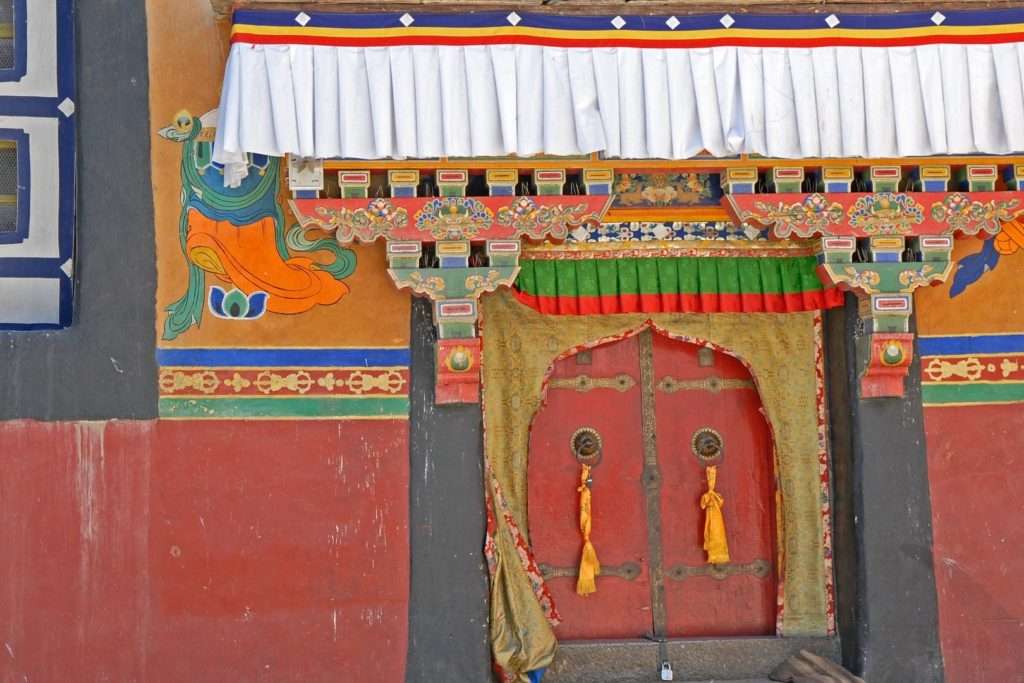
Buddhist art in Lhasa


Tags: , .


March 9th, 2011

Development vs conservation in Yunnan

By: Mei | Categories: Culture, News You Can Use

Beautiful and diverse, southwestern China’s Yunnan province is not only one of our most popular destinations, it is where WildChina was born. In the initial stages of China’s dizzyingly fast modernization, Yunnan avoided much of the environmental degradation experienced by other provinces. But little is known about the current state of Yunnan’s environment in the face of accelerating development.

R. Edward Grumbine, Environmental Studies faculty at Prescott College, Arizona, is working as a senior scholar with the Chinese Academy of Sciences at the Kunming Institute of Botany.

Grumbine’s research focuses on the battle between development and conservation in Yunnan. His book on this subject, Where the Dragon Meets the Angry River, was published last year by Island Press.

Grumbine recently shared some of his experiences and views on Yunnan and more in this interview, reprinted here with permission:

How much time did you spend in Yunnan conducting your research for this book?

R. Edward Grumbine: From 2005, I spent around three to five weeks in Yunnan every year. I began to write upon my return to the US in 2008.

Where did you conduct your research in Yunnan?

Grumbine: Between 2005 and 2010 I’ve hiked from the Nu River to the Lancang as well as areas around Zhongdian [Shangri-la], Deqin, Yubeng and Xishuangbanna near the border with Myanmar. I’ve also spent time in Pudacuo National Park, Laojunshan, Nizu, and in ‘Banna near the China-Laos border. Additionally, I’ve made it out to Gonggashan and Kangding in Sichuan province.

I’ve lived in Kunming since last August and will be here on a fellowship until 2012. Throughout my time coming to Yunnan, there have been numerous short trips to Beijing as well.

What led to you deciding to write a book about Yunnan?

Grumbine: The book is about Chinese conservation, using Yunnan as the main focus of the story. Imminent development of all kinds, but especially hydropower projects in the Nu Valley, helped me decide to write a book. I decided to write after my second trip to Yunnan in 2006, but I did not begin to write until 2008. I needed more time here to gain perspective on very complex issues.

What were some of the biggest surprises that you encountered in the course of your research?

No real surprises, but lots of interesting experiences. I guess the biggest surprise was the role of the local government versus the role of the central government.

What was surprising about that?

Grumbine: Most foreigners believe that the central government in China has 100 percent authority and complete control. After all, China is a one party-state system.

But the reality is that local governments at all levels have real power in terms of implementing Beijing’s laws, rules and regulations, so things are very complex on the ground. This situation does not match the stereotypes that many Americans and other foreigners have about power in the PRC.

Why is Yunnan’s biodiversity important?

Grumbine: There are three ways to answer this question.

Yunnan’s biodiversity is globally important as it is a true hotspot with more species than most other places on Earth. Yunnan is therefore important to the world if you value the existence of wild species and habitats.

Yunnan is regionally important from the standpoint of providing ecosystem services like clean water, good air, carbon sinks from intact forests, reduced soil erosion, and much more. Provision of these services depends on ecosystems continuing to function.

Species make up ecosystems; losing species impairs to X degree ecosystem health and function, depending on the details. So far, however, people are used to getting healthy ecosystems for free, even if Yunnan sits upstream from Southeast Asia.

Yunnan’s diversity is important to local people since they depend to a greater or lesser degree on nature for food, shelter and clean water. These local values change from place to place in Yunnan.

What makes Yunnan different from other biodiversity hotspots around the world?

Grumbine: One big difference: Yunnan is close to the most diverse temperate area anywhere on the planet!

Another difference is — there are still many local people who depend directly on natures’ services— the majority of humans living here still are rural, not urban. Of course, even Kunmingers depend on getting water supplies from somewhere.

Another difference— no one knows how much biodiversity has already been lost in Yunnan, especially large mammals and primates. The last surveys were done 15 to 20-plus years ago and are way out of date.

I expect that today virtually every primate and many if not most large mammals are either extirpated from Yunnan or much more endangered or threatened than we think. This is the “dirty secret” of biodiversity here.

The impacts of losing or reducing the populations of these animals have never been studied in Yunnan – or anywhere in China – but research in the US shows that ecosystems function less well when large critters are lost from the system, and that there is a time lag from species loss to negative effects appearing.

Given recent news out of Beijing suggesting that China plans to dam the Nujiang, what do you think the impact on the Nujiang and Salween valleys will be?

Grumbine: So far, nothing yet is confirmed about the dams going forward in the Nu, but I expect that some will indeed be built. Impacts will depend on how many total dams and which ones of the 13 proposed originally will get built. Not all the dams would have the same impact – some are worse than others.

Then you get into defining what a specific impact is – relocating how many local people? With or without adequate compensation? Where do they get moved to? What about the loss of a free-flowing wild river? This last one is not a value high on the list to most Chinese, but important to global environmentalist viewpoints.

Impacts on Nu biodiversity? Most of this would result from turning a river into reservoirs with consequent impacts on aquatic species, but no one knows the details. Without access to government studies, no one can assess impacts, or evaluate the quality of the studies themselves.

And what about impacts downstream? On the river in Myanmar? The impacts of selling most of the power to Thailand? Vietnam? Or moving it east to southern China’s industrial zones? How about the impacts of transmission lines wherever power does go?

Then there are the impacts of hydropower reducing Chinas’ carbon footprint by helping China use less coal. The list goes on.

As the world’s ‘third pole’, Tibet supplies much of Asia with vital freshwater – what does the future hold for these rivers as things stand now?

Grumbine: As things stand now, no problem. But, the future looks pretty grim.

Despite regional differences across the Third Pole, many Chinese glaciers are losing mass – melting – and this trend is clear into the future. Much argument is about when, not if ice loss in China alone reaches critical thresholds. Projections vary: 2040, 2050, 2060, 2080?

We don’t know, but the loss continues and will continue even if the world begins to deal with carbon emissions— and so far the world has not done so much here.

So this means that there will be less water coming from Tibet’s rivers and that the loss will increase over time. There will be less for people to use and less for all other species to use as well.

What, if anything, can be done to protect the future of these rivers?

Grumbine: Improve sharing of information between countries on transboundary river flows and related issues, creating water sharing management agreements between countries in the region, listen to the experiences of local peoples with how they manage water under conditions of scarcity. Fund water-saving and conservation in urban areas and irrigation systems in rural areas.

Price water at its true delivery cost – done nowhere in China, as water is subsidized by the state.

These measures would begin to help.

Tags: ,,, .


March 8th, 2011

Tibet travel ban doesn’t include all of China’s Tibetan regions

By: Mei | Categories: Culture, News You Can Use

Unfortunate travel news out of Tibet: foreign travelers are not being allowed into Tibet this month and no clear timetable for when they will be allowed back into the region has been given.

The AFP received this news from the Xizang Tourist General Company as shown here. The most recent block on foreign travelers comes on the third anniversary of the pre-Olympic anti-government riots that took place in Lhasa and other Tibetan regions in March 2008. Foreign travelers were kept out of Tibet for a year after the riots.

Given the already substantial logistical challenges of planning a journey to Tibet, unclear government policies are enough to make some travelers give up on their dreams of traveling to the ‘roof of the world’ to experience its breathtaking landscapes and understand its people.

But there is more to “Tibet” than what is contained by the autonomous region called Tibet. Northwest Yunnan, western Sichuan and much of Qinghai are historically, physically and culturally part of what was once the kingdom of Tibet and is now occasionally referred to as ‘Greater Tibet’.

Traditional Tibetan lifestyles can still be viewed in destinations such as Shangri-la, Kangding and Yushu, and the sacred snow-capped peaks of Meili and Minya Gongga rival all but a handful of the mountains found within Tibet proper in terms of altitude or awe-inspiring size. Yunnan – especially our award-winning Songtsam Circuit – and Sichuan not only have beautiful and authentic Tibetan regions, they are also home to a mindblowing variety of topography, climate and cultures.

If you are planning a China trip and want to include a Tibetan experience, keep in mind that what is commonly thought of as “Tibet” extends well beyond the borders of the area that is currently off-limits. For more information about how to visit genuinely Tibetan destinations not covered by the ban, contact us today.

Tags: ,,,,, .


February 16th, 2011

The Shangri-La Effect

By: Mei | Categories: Culture, News You Can Use

Named one of the “up-and-coming” places to visit, it seems that the word “Shangri-La” is everywhere. The term, which is said to “evoke imagery of exoticism of the Orient,” has initiated a circular series of inspired events:

James Hilton coined the term in his 1933 novel Lost Horizon and described Shangri-La as an earthly utopia nestled high in the Tibetan Himalayas. His story and legend describe it as “a lost paradise where the ravages of time and history have been held back, where human beings live in harmony with nature, and where the wisdom of the planet is saved for future generations” (Michael Wood, BBC).

Inspired by this exotic legend, world-renowned architect I.M. Pei designed the Miho Museum with Shangri-La in mind:

Located southeast of Kyoto, Japan, the museum was commissioned by Mihoko Koyama who founded Shinji Shumeikai, a new religious movement whose followers believe that by “building modernist architectural masterpieces in remote places they’re restoring the planet’s balance” (Jeff Sharlet, author).

This past year, the Paul Winter Consort collaborated with several different artists, including Yangjin Lamu, a “spiritual musician” from Tibet, to produce the song entitled “Miho: Journey to the Mountain,” which was inspired by and recorded in the Miho Museum.  At the beginning of the week, the song was named Best New Age Album of the Year at the 53rd Grammy Awards. According to Hexun.com, Yangjin Lamu is not only the Founder and Chairman of the China Overseas Tibetan Association, but she is first Chinese person – one with a Chinese passport – to win the prestigious award.

Lost Horizons started the hunt for Shangri-La, the utopian destination that was purportedly found in the town previously known as Zhongdian. This destination has gone on to inspire everything from architecture to award-winning music to people’s perception of China. Perhaps the power of Shangri-La isn’t so mythical after all…

Photo Sources: WildChina, The Sydney Morning HeraldMetro UK

Tags: ,,,, .


January 20th, 2011

Discovering Tibet: Confronting authenticity and romance in one of the world’s most breathtaking places

By: Mei | Categories: Culture, News You Can Use

The following is an excerpt taken from The World of Chinese.  The author LeeAnn Deemer and her family traveled with WildChina in August of 2010. Here is their story:

When we get off the plane in Lhasa, we can’t quite believe we are really in Tibet. This may have been partly due to the unscheduled stop in Chengdu which meant that we arrived hours later than we’d planned, but that was only part of it. The approach to Lhasa is vertiginous, as the plane banks left and right, dipping down below the peaks of the maze of mountains we are navigating. The runway is tucked into a narrow valley with mountains on either side.  Yet in retrospect the sensation of unreality upon leaving the airport in Lhasa is probably mostly caused by the altitude. I feel odd and slightly light-headed, and the colors around me all seem much brighter than usual.  The sunlight is intense and our surroundings look as sharp as cut glass. Lhasa itself lies about a 90-minute drive from its airport, hidden behind a chain of mountains, but Lhasa will have to wait. Excited to salvage what we can of the day, we head west, away from the capital towards the first stop on our seven-day itinerary, Tsedang.

We have brought three generations of the family on this trip—my husband’s parents who are long-time expats in Beijing and our two older children who are nine and six. We’ve left the three-year old in Singapore, where we live, as the altitude change is not recommended for children under five. The six of us bounce along the road with driver and guide, unable to tear ourselves away from the sights out the window. The town around the airport is so small that we are almost immediately in the countryside, passing farmhouses and fields. We see children playing, old women threshing on the side of the road, goats, sheep, pigs, dogs.

Tsedang lies in the Yarlung Valley, considered to be the cradle of the first Tibetan kingdom in the seventh century. We head directly to Yumbulagang, a fortress cum chapel which is said to be the oldest building in Tibet, although much of what one sees today is recent reconstruction. We only arrive about an hour or two before sunset, the last visitors of the day. Yumbulagang perches on the tip of a ridge, overlooking the flat green valley below. We are intimidated by the steep path and even steeper steps, as we’ve been warned not to exert ourselves for the first few days at this altitude. Any other visitors seem to have left hours ago, and we have our pick of the ponies, yaks, and one lone camel loitering in the parking lot with their owners, waiting to carry visitors up to side of the cliff. The view over the valley is spectacular, revealing neat green fields in the golden light of the setting sun. We have the place entirely to ourselves, and the only sound apart from the children frolicking in the distance is the flapping of the enormous tangle of prayer flags in the wind above the Yumbulagang.  The setting and the solitude conspire to fulfill every fantasy that I had ever had about Tibet—here I am in one of the most spiritually profound places in the world and I drink in the moment.

———-

For the full article, click here. Photo by Pete Deemer.

Tags: , .


November 19th, 2010

Tibetan Thangka Academy: Saving a dying tradition

By: Mei | Categories: Culture, News You Can Use

Our journeys are great ways to enjoy the beauty of China’s countryside as well as the dynamism and history of its cities, but they are also unique opportunities to meet inspiring and unforgettable people.

During a recent visit to Shangri-la, we were honored to meet Lobsang Khedup, a Tibetan monk who is not only working to help impoverished youth from the Tibetan regions of Yunnan, but who is also helping preserve the 1,800-year-old tradition of thangka painting.

Thangka painting is the traditional Tibetan style of painting deities using paint made from local minerals. Deeply imbued with the ethos of Tibetan Buddhism, this painting style focuses on the facial expression of the subject. Ideally, the longer one looks at a thangka painting, the more subtleties emerge from the deity’s facial expression.

A native of Shangri-la, Lobsang is a thangka painting master. An average painting takes him around a year to complete. The high degree of detail and difficulty of thangka painting combined with advancements in printing and copying over the last century have resulted in a dwindling number of thangka masters.

Lobsang started the Tibetan Thangka Academy in 2008 and now has 16 students from the countryside who are studying under him and another master.

Students at the academy not only study the art of thangka painting, they also take classes in Buddhism and English. Their education is provided free of charge, with funds provided by the Shangrila Association.

“When painting, your feelings are the most important,” Lobsang told us in his study. “But you also need knowledge and wisdom – without education you cannot paint.”

In addition to teaching its Tibetan students the art of thangka painting, the academy offers classes to the general public in both thangka and traditional Chinese painting styles.

Lobsang has done such a good job of preserving the dying thangka art that the Shangri-la government has commended and supported the academy. We admire Lobsang not just as an amazing painter and socially minded individual, but as someone savvy enough to navigate the difficult political landscape in his home.

Tags: ,,, .


November 5th, 2010

Portrait of an LBX: the Post-Journey Interview

By: Mei | Categories: Culture, News You Can Use

It’s been almost a year since we first spoke with Portrait of an LBX bikers and writers Andy Keller and Evan Villarrubia. We caught up with them this week to talk about their reflections on their trip, which ended on September 13, 2010.

LBX's spectacular campsite in Qinghai province, August 2010 (Photo: Portrait of an LBX)

WildChina Travel: Now that you’ve finished with the trip, how can you define laobaixing? How has your understanding of the term, and the people that define it, expanded, been flipped on its head, morphed, etc.?

Andy Keller: I think laobaixing boils down to a political term, as politics controls so much in China, although it has an economic aspect as well, since politics is so tied to money in China (as with anywhere else). China’s laobaixing make up the vast majority of Chinese people. It’s not just a synonym for “peasant” or “farmer” because it’s not just the people out in the countryside who are laobaixing. Basically, they are the people who have less power in the face of the government.

Evan Villarrubia: All the charm of China has come from individual people, the ones “doing their own thing” in accordance with traditions and their own values — the laobaixing. “New China” has come from outside of the laobaixing.

WCT: Do you still believe that the term laobaixing can define and encompass the people / socioeconomic group that you encountered and interacted with on your trip? Why or why not?

AK: Absolutely. With very few exceptions when we met relatives of friends working in the government or party or big business people, the people we interacted with on the trip were all laobaixing. The number of people without government connections in China is so large that really there’s no way the group of people we interacted with could not almost all be laobaixing.

WCT: What was your greatest surprise on the trip? Your biggest regret?

EV: For me, the biggest surprise was the Tibetan plateau. I had never seen skies like that before, and we never expected how different the people were from anything else we’d encountered. The biggest regret of the trip was not making it to either Hubei or Hunan, two quintessentially Chinese places right in the middle of the country, which our big loop didn’t permit time to visit. This will have to be rectified later.

AK: The biggest surprise for me was discovering just how development and modernity almost always trumped concern for culture, the environment, traditional society, etc. We went into the trip with the impression that with so much good stuff disappearing everyday, people would have to be up in arms about it once we sat down and had honest conversations. By and large though, the people we met were as single-mindedly focused on “development” as the government and were happy to leave tradition, culture and even the natural environment behind for the sake of their concept of modernity.

Despite what you see in the media, most laobaixing are not dowsing themselves in gasoline and lighting themselves on fire on the roofs of their homes as the demolition cranes move in. Most are content to take compensation and move out of their homes, away from the fields, away from their communities and into apartment complexes outside of the city, where the communities and social networks that made traditional China so unique no longer exist.

My biggest regret was definitely the places we didn’t get to see – Hubei, Hunan, Xinjiang, Tibet and pretty much all of Dongbei.

WCT: Which area(s) of China ended up being your favorite? Why?

EV: Yunnan, for natural beauty, colors, extreme cultural variations, food, and tea. You can spend days cruising chilly mountaintop villages above endless rice terraces with the Yi and Hani, and the next day drop into the Dai valleys full of pineapples, coconuts, and wooden stilt homes. As long as you stay off the tourist trail, there’s no end to the surprises.

AK: Ditto.

WCT: What is one piece of advice you would give to travelers who want to experience the ‘real’ side of China?

EV: Stick to the mountains, small roads, and small villages where real culture, real beauty and real people still exist.

Read more of Andy and Evan’s reflections and trip accounts at Portrait of an LBX.

Tags: ,,,,,,,,,,,, .


September 21st, 2010

China’s East and West get closer with new Shanghai-Lhasa tourism agreement

By: Mei | Categories: Culture, News You Can Use

In eastern China, it’s easy to think that the country’s provinces to the West – namely Tibet, Xinjiang, and Qinghai – are a world away.

But, recent developments at the Shanghai Expo are bringing these two regions of China closer than ever. During Tibet Week at the Expo, a new tourism agreement signed between Shanghai and Lhasa, Tibet’s capital city, confirmed that visitors will soon be able to enjoy “luxury train travel and short-stay trips” between the two cities.

To accommodate increasing visits to the plateau province, government officials, local tourism bureaux and travel agencies will collaborate on increased Tibet-bound tourism. Officials are discussing more efficient train stops and connections, airlines are developing more routes from Shanghai, Xi’an and Xining, and travel agencies are in talks to promote more 3-5 day trips to the area.

Shanghai, a perennial tourist favorite, will also share its tourism knowledge and expertise. As Tibet is one of our favorite fall destinations, we are excited to see what this agreement will mean for western-bound tourism here.

China travelers, stay tuned for developments pending the outcome of this cross-country travel agreement.

Tags: ,,,,,, .